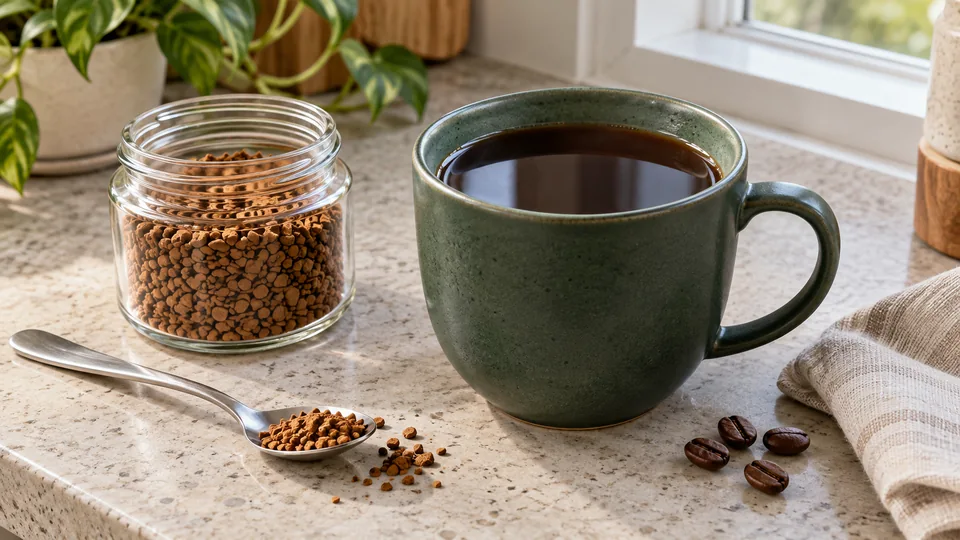
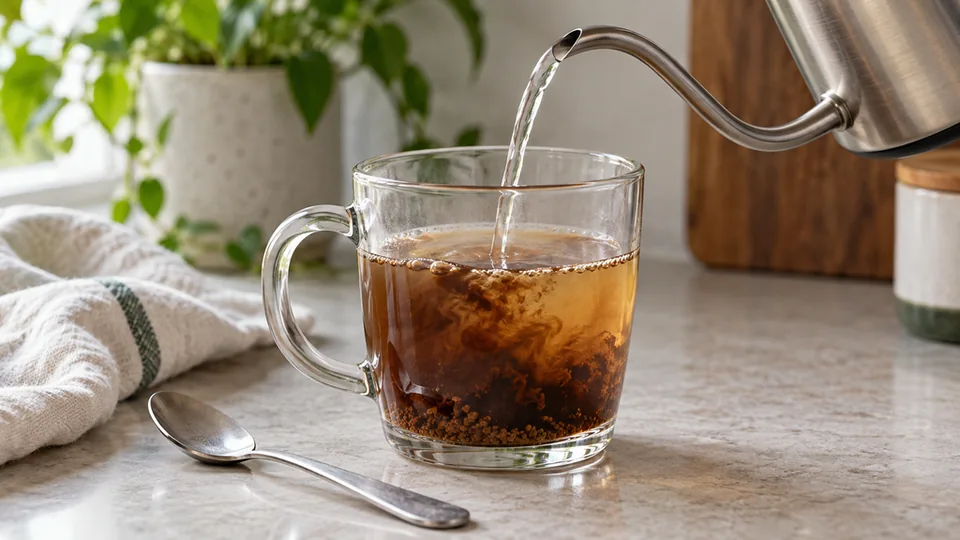
Instant coffee is brewed coffee that has been dried into a soluble powder or granules. Add water, stir, and those coffee solids dissolve to make a drink. It is also called soluble coffee.
That explains the convenience. The brewing and drying have already happened before you open the package. You are adding water back to the coffee, rather than extracting a fresh drink from ground beans.
What is instant coffee made from?
The essential production sequence is straightforward:
- Roast and grind the beans. Coffee beans are prepared for extraction.
- Brew and concentrate the coffee. Water extracts soluble material from the grounds.
- Dry the extract. Removing water leaves the soluble coffee used in a powder or granulated product.
The label may then identify the drying method, the coffee origin, the bean type, or additional ingredients. These describe different aspects of the product. A Vietnamese origin describes where the coffee comes from; Robusta describes the coffee type; freeze-dried describes a processing method.
Where does freeze-dried coffee fit?
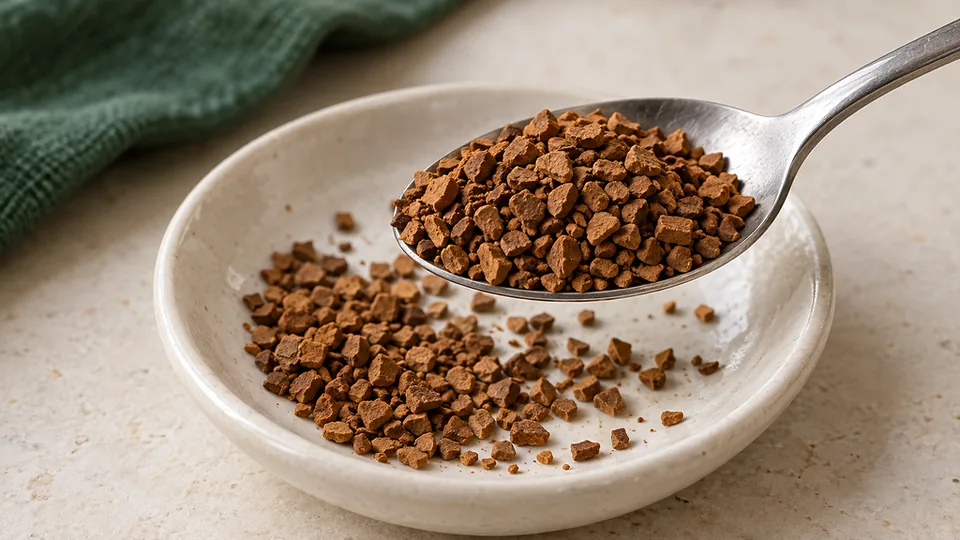
Freeze-dried coffee is a type of instant coffee. The coffee extract is frozen, then dried under vacuum as the ice is removed. The result is soluble coffee that can be reconstituted with water.
Spray drying is another method: coffee extract is sprayed into hot air so that the droplets dry. These methods give manufacturers different ways to turn liquid coffee into a stable dry format.
A drying method is one useful detail when comparing products. Bean selection, roasting, extraction and the finished formulation also shape the cup. For a commercial decision, read the specification and evaluate a sample prepared according to its instructions.
Instant coffee vs. ground coffee
A fine appearance can be misleading. Ground coffee still needs brewing; plain soluble coffee has already been extracted.
| Product | What it is | How you prepare it |
|---|---|---|
| Plain instant coffee | Dried soluble coffee extract | Add the stated quantity of water and stir |
| Ground coffee | Roasted beans ground into smaller particles | Use a brewing method and separate the grounds as appropriate |
| Instant coffee mix | A formulated product with soluble coffee and other ingredients | Follow that mix’s serving instructions |
This distinction is particularly useful when a recipe says “coffee powder.” Check whether it means soluble coffee, an espresso powder intended for baking, or ground beans. Choosing the correct ingredient affects how it mixes into the recipe.
Is instant coffee the same as a 3-in-1 mix?
Plain instant coffee and a 3-in-1 mix serve different needs. A plain product lets you decide how much milk and sugar to add. A 3-in-1 commonly combines coffee, a milk or creamer component, and sugar in a single serving.
A flavored mix adds another layer to the formulation. Read the ingredient list and preparation directions: the weight of a coffee-mix serving includes its other ingredients, so its grams cannot be compared directly with the grams of plain coffee in a cup.
For example, comparing a 2 g portion of plain coffee with a 16 g coffee-mix stick tells you little about the resulting coffee intensity without knowing the formulation and serving volume.
What does Robusta tell you?
Robusta refers to coffee from Coffea canephora. It is a coffee type, rather than a drying process. You can encounter Robusta in roasted beans, blends and soluble coffee.
World Coffee Research describes Robusta’s important role in soluble coffee and the influence of cultivation and processing on its quality.
When reviewing Robusta freeze-dried coffee, ask about the product’s intended cup profile, preparation ratio and ingredient declaration. A clear origin story becomes more useful when it is supported by clear product information.
How to choose an instant coffee
- Start with the occasion. A black coffee, an iced milk drink and a ready-mixed serving can need different products.
- Read the ingredient list. Distinguish plain coffee from a sweetened or flavored formulation.
- Compare prepared cups. Follow each product’s directions instead of using the same spoonful for every format.
- For B2B sourcing, request the details. Ask about the ingredient declaration, preparation instructions, packaging and current product availability.
Questions people often ask
Is instant coffee made from real coffee?
Yes. Plain soluble coffee starts with coffee beans. A coffee mix can also contain milk or creamer, sugar and flavoring, so check the specific product label.
Can you make instant coffee with cold water?
Some products are designed for cold preparation. For others, dissolving the coffee in a little warm water first can make an iced drink easier to mix. Follow the preparation directions on the package.
Is instant espresso freshly brewed espresso?
Instant espresso is a soluble product prepared by adding liquid. Fresh espresso is extracted from ground coffee using an espresso brewing process. The names describe different preparation experiences.
Explore Vietnamese coffee with CREST
CREST’s portfolio brings together a pure Robusta line and 3-in-1 and flavored 4-in-1 mixes made with freeze-dried coffee. Visit the CREST coffee range for the current status of each line.
If you are an importer or distributor exploring branded Vietnamese coffee, connect with Crest & Company to discuss your market and product interests.